 It Is PossibleIt Is Possible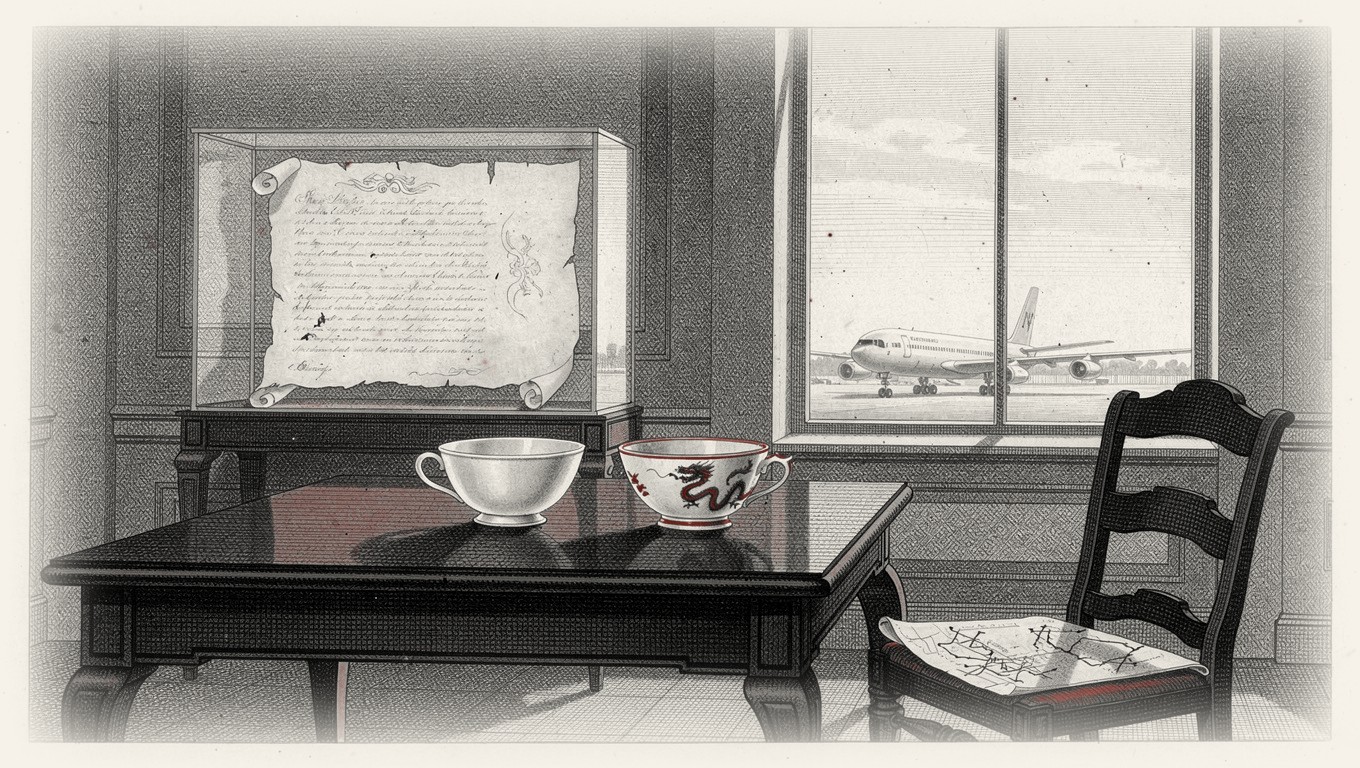
Mexico paid for the ticket to the fight with China. And they did not invite him to the table.
On Wednesday, the president of the United States will be standing on a runway waiting for a plane.
He does not do it with anyone. He receives heads of state at the White House, like everyone else. The last time a U.S. president personally went to the runway to receive a rival was in 1959: Eisenhower waited for Jrushchov at Andrews, at the height of the Cold War.
The one getting off the plane rules the world's second-largest economy, has not set foot in the White House in eleven years, and skipped the UN General Assembly to come.
Meanwhile, there is a war in Iran, a former Venezuelan president imprisoned in Brooklyn, armed drones over the border with Mexico and a trade treaty under review.
What is going to be signed? What is not? What is Trump gaining? And where does Mexico stand, the only country in the world that took seriously the order to fight with China?
This is what I want you to understand.
Here it explains what two state visits in five months mean, what each of the two men sitting down needs, what will be signed and what will not, and why Mexico is the only loser before the meeting even starts.
This analysis isn't funded by any government, party, or advertiser. Readers pay for it. Share it, and if funds come in, you take forty percent.
Trump went to Beijing in May. Xi comes to Washington in September. Between the two dates is a trade truce expiring November 10, a midterm election on November 3, and a tech race neither wants to put on the table.
What follows explains why a president who never shows up on the tarmac is heading to the tarmac, what each takes back, and why the country that slapped the most tariffs on China is the only one not in the photo.
The White House released the itinerary. It looks like protocol. It's a text written in gestures, and each gesture has a date of origin.
Wednesday 23. Trump and Melania receive Xi and Peng Liyuan on the tarmac at Joint Base Andrews.
An American president does not go to the tarmac. He receives at the White House, at the South Portico, with the band playing. Going to the airport is deliberately stepping down a rung. The last time it happened with a rival was September 15, 1959, when Eisenhower waited for Nikita Jrushchov at the same base, at the height of the Cold War. That visit produced the "spirit of Camp David" and lasted eight months, until a U-2 fell over Sverdlovsk.
The tarmac gesture does not say "we are friends." It says "I recognize you as an equal." And that, said by a president of the United States to a president of China, had not been said out loud since the trade war began.
Thursday the 24th. Arrival ceremony, military review, bilateral meeting and state dinner in the East Room.
It is the full script of a state visit, with no cuts. Under Obama, in 2015, Xi received the same. The difference is what happened between one dinner and the other: 100 percent tariffs in both directions, export controls on chips, Chinese controls on rare earths, and a truce signed in Busan in October 2025 that expires November 10. What in 2015 was normal courtesy, in 2026 is a declaration: the fight is paused.
Friday the 25th. Private tea and a tour of the National Archives to see the founding documents, in the 250th year of independence.
This is the gesture least remarked upon and the one that says the most. Trump takes Xi to see the Declaration of Independence and the Constitution. It is not tourism. It is a message for two audiences. For Americans: the president shows the rival the papers that make us who we are. For the Chinese: Xi is received as heir to a civilization that sits as an equal with another. Neither man wastes a symbol, and they share this one.
And there is a fourth fact not on the itinerary. Xi skipped the United Nations General Assembly to make this trip. The UN meets that same week in New York. Any other year, the president of China would have spoken to the Assembly and then come down to Washington. This year he chose Washington and left the UN empty. When the world's second most powerful country prefers a bilateral dinner to a multilateral podium, multilateralism has already lost.
September 2015. Obama in the White House. Zuckerberg speaking to Xi in Mandarin in Seattle. The topic was cybersecurity. Eleven years later, all of that feels like another century.
In 2015 Xi came to sign an agreement against commercial cyber espionage. It was only half kept. The rest was photo ops: Boeing in Everett, Microsoft in Redmond, the dinner in the East Room with Obama.
What came after, in order:
2018. Trump opens the trade war. Tariffs on three hundred sixty billion dollars of Chinese goods. China responds.
2020. Phase One deal. China promises to buy. It buys less than promised. The pandemic arrives and no one speaks of it again.
2022 and 2023. Biden bans the sale of advanced chips to China. Nvidia loses its largest market outside the United States. China responds with controls on gallium, germanium and later on rare earths.
2025. Second Trump term. Tariffs that at their peak exceed 100 percent in both directions. In October, in Busan, the two sit down and sign a one-year truce: Washington suspends its affiliate rule, Beijing resumes the flow of rare earths. It expires November 10, 2026.
2026. Trump goes to Beijing in May. Xi announces a "Constructive, Strategic and Stable Relationship." A Trade Board and an Investment Board are created. China agrees to buy two hundred Boeing aircraft and seventeen billion dollars a year in agricultural products. Four months later, Xi comes to Washington.
In eleven years the relationship moved from cybersecurity to mutual survival. And that is what must be understood about this visit: they no longer come to solve a problem. They come to keep the other from falling, because if one falls, the other falls too.
Lo que ha leído hasta aquí es el planteamiento. Lo que sigue es el trabajo: qué necesita cada lado, qué se firma y qué no, la carrera de la IA, y el capítulo sobre México que nadie va a escribir esta semana.